
Reducing Cognitive Load. Improving Human Performance.
I design systems that help people think clearly, act quickly, and perform effectively.
I specialize in reducing cognitive load and decision friction in complex SaaS platforms and service ecosystems. My work focuses on transforming overwhelming workflows into clear, intuitive experiences that improve both user outcomes and business performance.
Grounded in human factors, I design for how people actually think, decide, and operate under pressure—not just how interfaces look.

Turning Complexity into Clarity
Most platforms don’t fail because they lack features—they fail because they overwhelm users.
Too many decisions. Too much information. Too much friction.
I focus on simplifying complex systems by structuring information, reducing unnecessary choices, and designing clear pathways that guide users toward confident action. The result is faster decisions, improved engagement, and better outcomes across the entire system.
Designed for Real-World Performance
My work is rooted in human performance.
With a PhD in human factors, I bring a deep understanding of how people process information, where they break down under cognitive load, and how design can support better thinking and execution.
Across platforms serving thousands of users—including veterans navigating critical services—I’ve led efforts to unify fragmented systems, reduce friction, and improve both user experience and organizational outcomes.
Proven Impact in Complex Systems
Proven Impact in Complex Systems
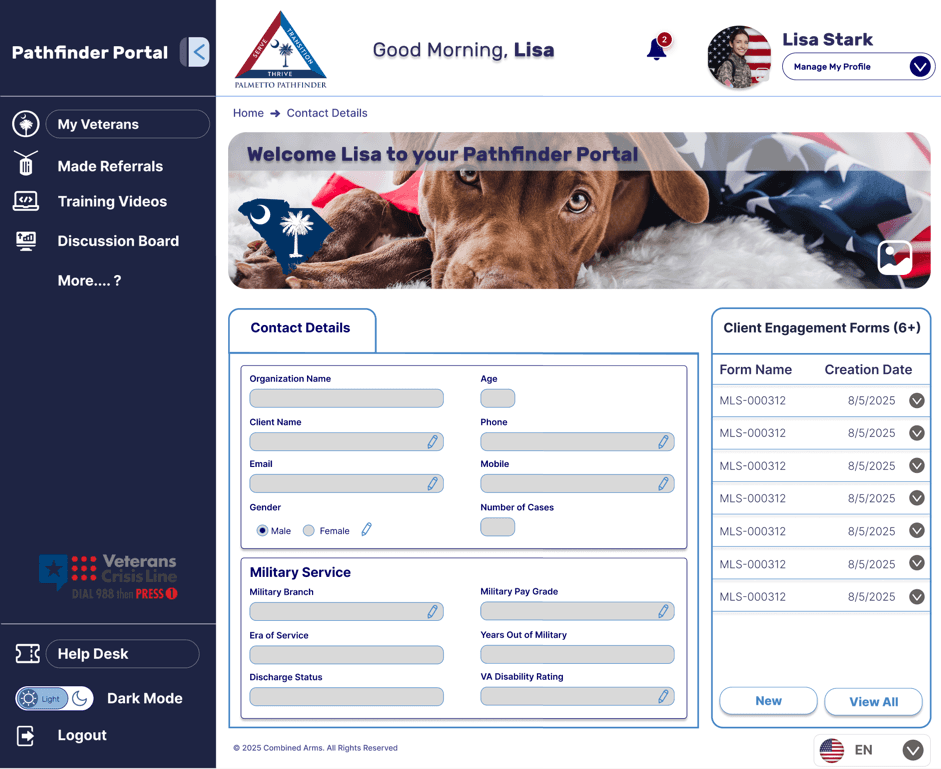
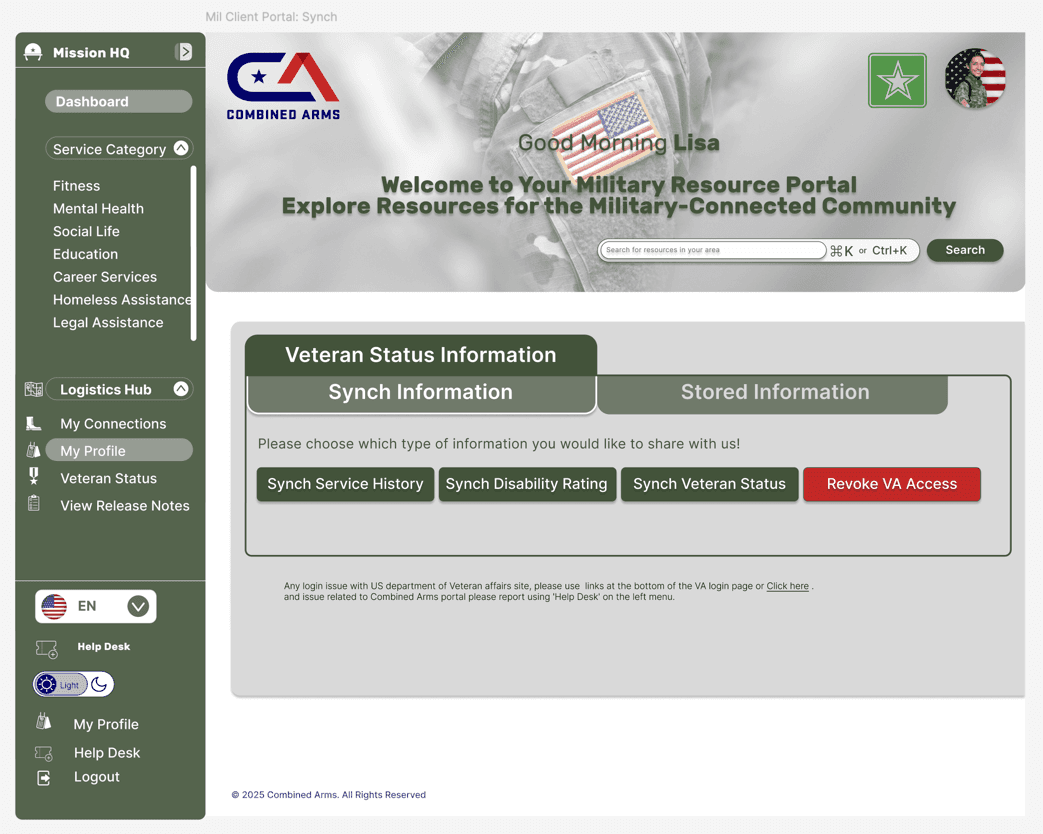
At Combined Arms, I led the redesign of a multi-platform SaaS ecosystem serving over 10,000 users, including veteran, partner, and administrative portals.
The system was fragmented, with complex workflows that created friction, confusion, and inefficiencies across both user and organizational experiences.
I focused on simplifying workflows, clarifying decision pathways, and reducing cognitive load across the platform—transforming how users navigated and interacted with critical services.
Measurable Outcomes
Reduced veteran user bounce rate by 5% through improved clarity and navigation
Decreased project turnaround time by ~15% by aligning UX with development workflows
Unified three disconnected platforms into a cohesive service ecosystem
Introduced UX validation checkpoints across the SDLC to reduce usability risk
Created scalable UX artifacts aligning product, engineering, and design across teams
Beyond the Interface
My work extends beyond screens into systems.
I partner closely with product, engineering, and stakeholders to align workflows, reduce friction at both the user and organizational level, and ensure that design decisions support real-world performance—not just interface usability.
This systems-level approach allows me to improve not only how products look and feel—but how they function, scale, and deliver outcomes.
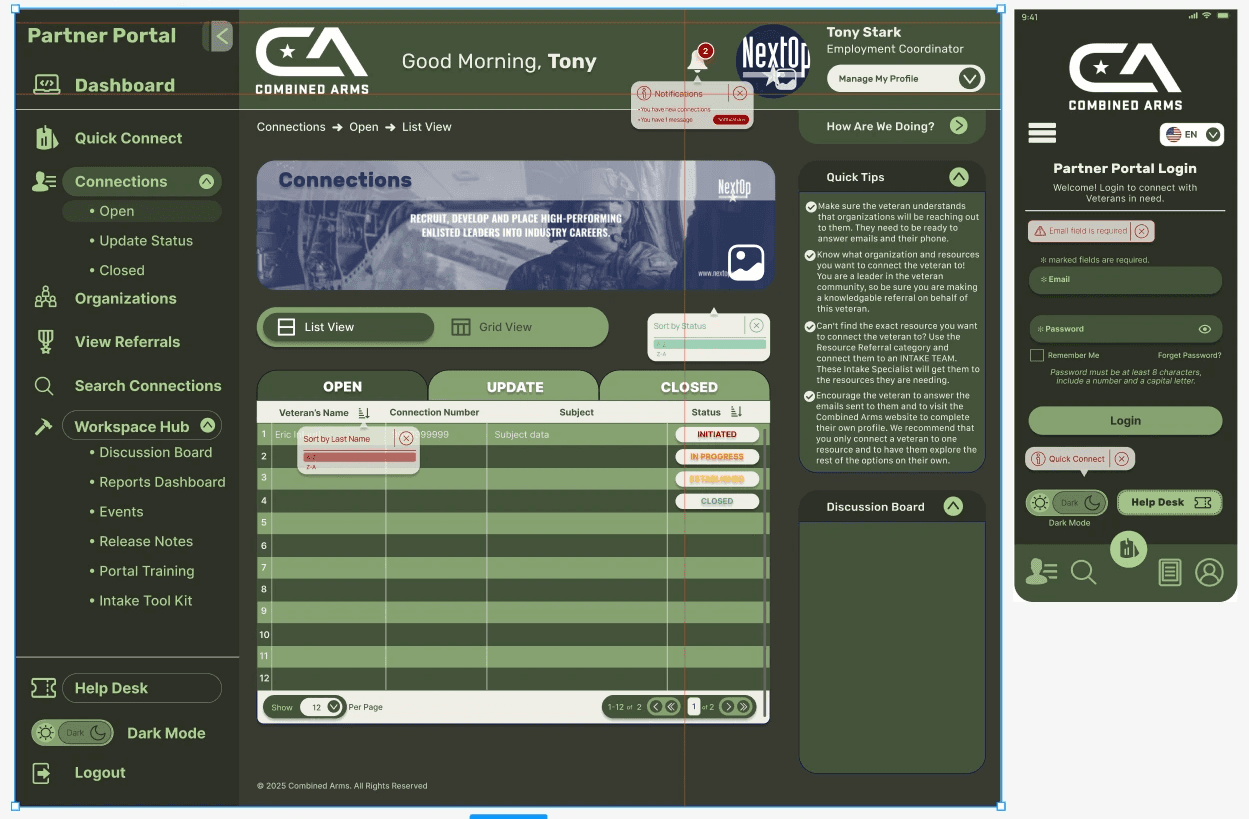
A Systems Approach to Clarity
I approach design as a systems problem—not just an interface problem.
In complex platforms, challenges rarely exist in isolation. They emerge from how workflows, information, teams, and decisions interact. My role is to bring clarity across that system—reducing friction not only for users, but across the entire product experience.
This means working beyond screens to align structure, flow, and intent—so the system functions as a whole, not as disconnected parts.
Reducing Cognitive Load
At the core of my work is reducing cognitive load.
Users don’t struggle because they lack capability—they struggle when systems demand too much at once: too many choices, too much information, or unclear next steps.
I focus on simplifying decision-making by:
structuring information for clarity
reducing unnecessary choices
designing clear pathways through complex workflows
The result is faster understanding, more confident action, and improved outcomes.
Designing for Human Performance
My background in Human Factors shapes how I approach every system I design.
I design for how people actually think, process information, and perform—especially under pressure.
This includes:
supporting attention and focus
reducing decision fatigue
designing feedback that builds confidence
The goal is not just usability—it’s performance. Helping people operate effectively within the system, even when complexity cannot be removed.
Behavior, Feedback, and Flow
I integrate principles from behavioral design and gamification to guide user action and reinforce progress.
By designing feedback loops, progression systems, and clear signals, I help users stay oriented, engaged, and moving forward—especially in environments where motivation and clarity directly impact outcomes.
This approach ensures that systems don’t just function—they support sustained engagement and meaningful use.
Supporting People in Meaningful Moments
Grounded in Lived Experience
My work is shaped as much by lived experience as it is by formal training.
As a Marine veteran, husband, father and dog dad, I’ve learned that clarity, discipline, and presence aren’t abstract ideas—they’re requirements. That perspective carries directly into my work, especially when designing for people navigating complexity, stress, or uncertainty.
I’ve seen firsthand how systems can either support people—or overwhelm them. That understanding drives my focus on reducing cognitive load and creating experiences that bring clarity when it matters most.
Practice Shapes Perspective
Beyond design, I teach mindfulness, breathwork, and yoga—practices that deepen my understanding of attention, awareness, and human behavior.
These disciplines inform how I approach design at a fundamental level: how people focus, how they process information, and how they respond under pressure.
I’ve also spent years studying contemplative and spiritual traditions, including Norse and Eastern systems, which continue to shape how I think about presence, resilience, and human experience.
Design with Purpose
For me, design is not just about creating better interfaces—it’s about supporting people in meaningful moments.
Whether helping a veteran access critical services, guiding a user through a complex workflow, or reducing friction in high-stakes environments, my goal is the same:
To bring clarity where there is confusion, and confidence where there is hesitation.

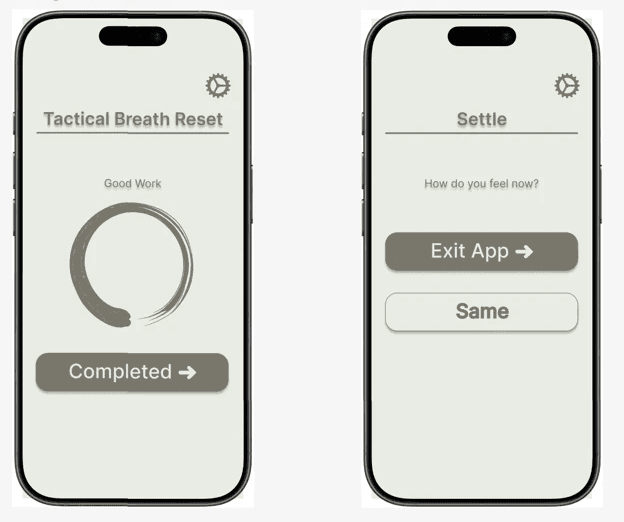
Where I’m Focused
I’m focused on designing systems where complexity is high, the stakes are real, and clarity makes a measurable difference.
This includes complex SaaS platforms, service ecosystems, and decision-heavy environments where users need to move quickly, confidently, and effectively.
I’m particularly interested in roles where I can lead UX strategy, reduce system-wide friction, and design for human performance at scale.
Let’s Build What Matters
If your platform is complex, your workflows are dense, or your users are overwhelmed—I can help bring clarity to the system.
Whether through product design, UX strategy, or systems-level thinking, my goal is to create experiences that support better decisions, faster action, and meaningful outcomes.
If that aligns with your work, I’d welcome the conversation.
Contact me…
My background in Human Factors shapes how I approach every system I design.
I design for how people actually think, process information, and perform—especially under pressure.
This includes:
supporting attention and focus
reducing decision fatigue
designing feedback that builds confidence
The goal is not just usability—it’s performance. Helping people operate effectively within the system, even when complexity cannot be removed.
Selected Writings
Some of the Books I've Authored
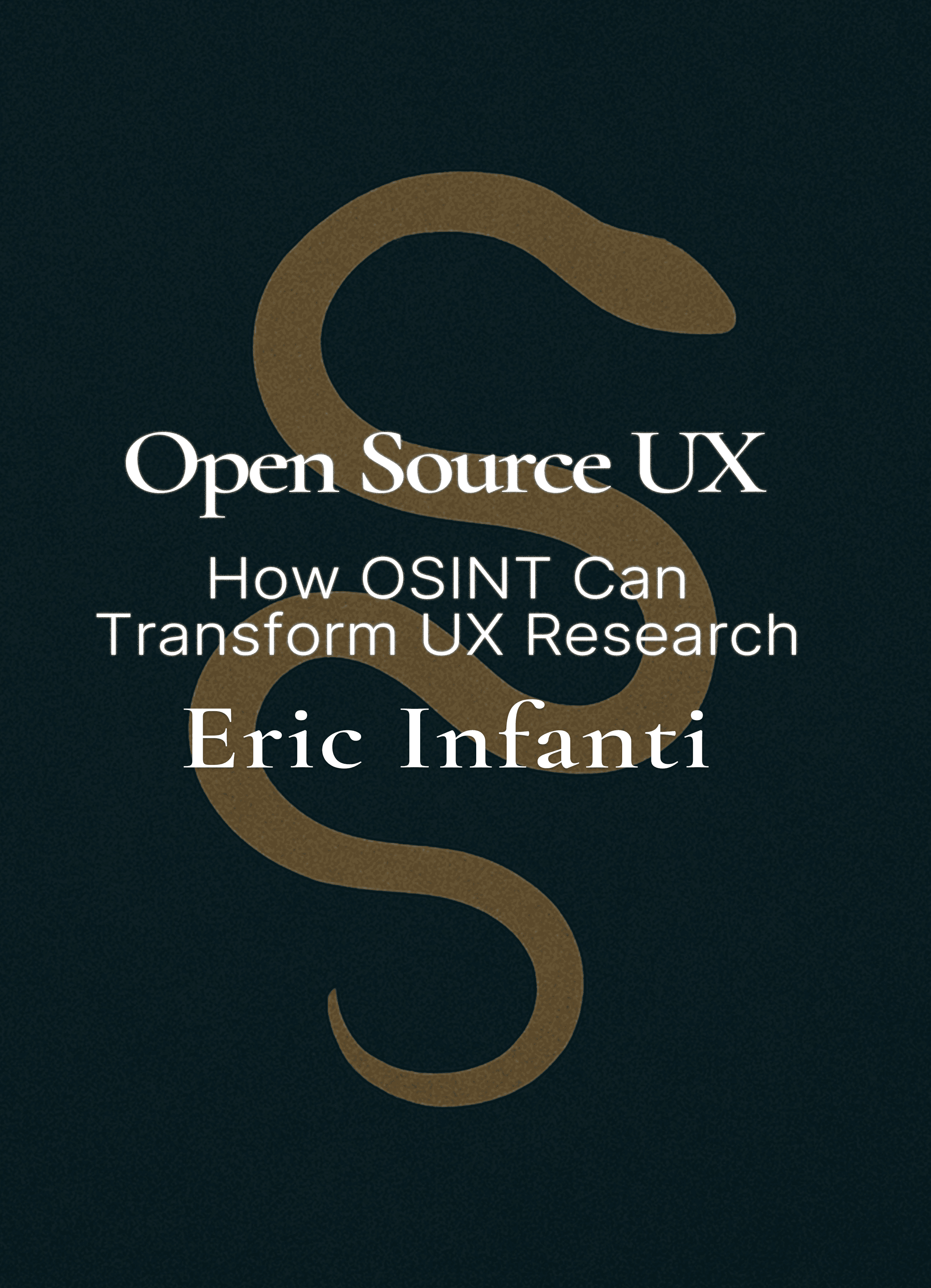
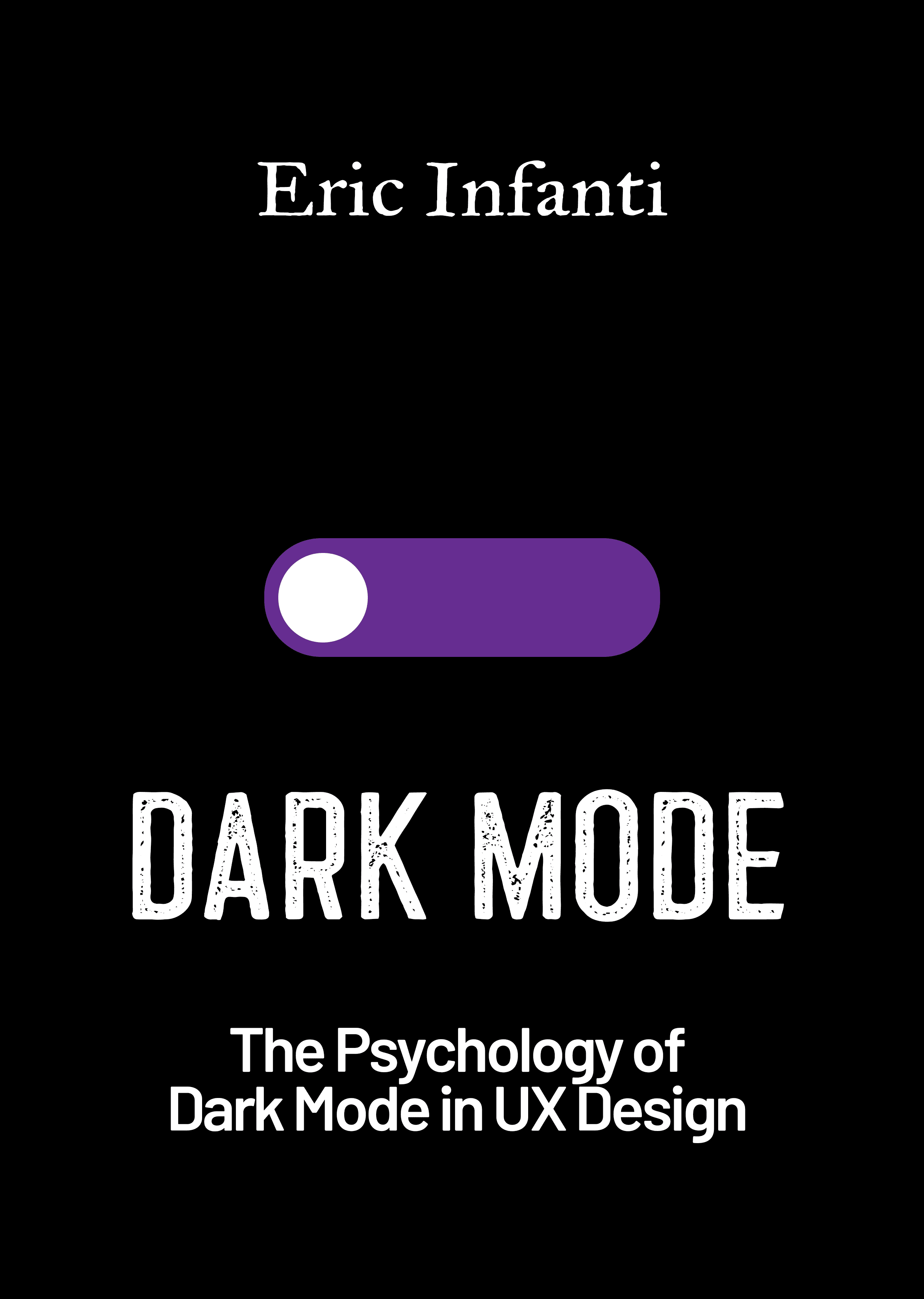
Books exploring UX, human performance, and the design of complex systems—bridging research, lived experience, and real-world application.