
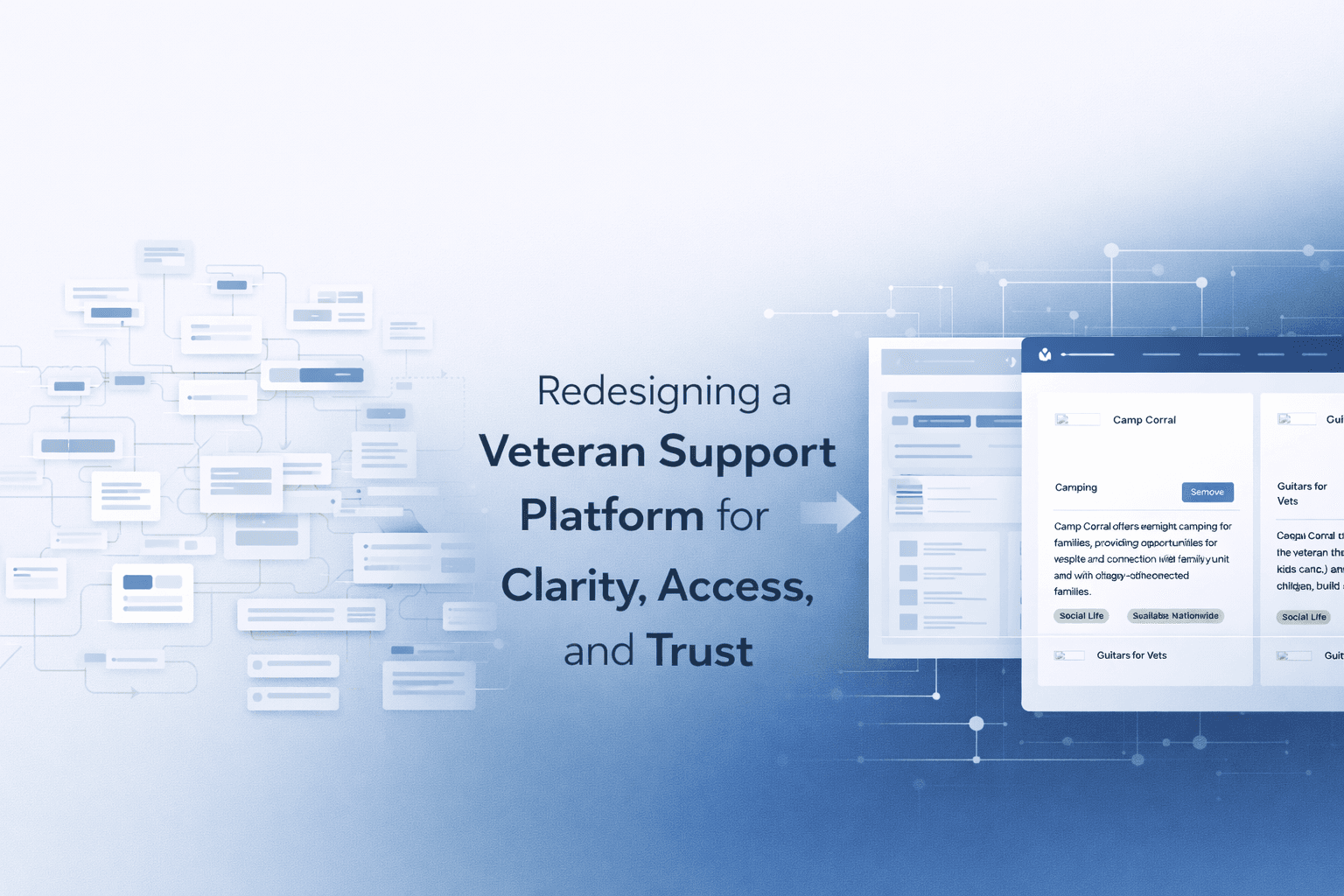
Project Snapshot
Product: Multi-Role Support SaaS Platform
Scope
Users: Veterans, Pathfinder Volunteers, Pathfinder Managers
Platforms: Desktop SaaS Platform + Mobile App (iOS & Android)
UX Strategy, Multi-Role System Design, Mobile + Web Experience Design
UX Strategy, Service Design, Information Architecture, UI Design, Workflow Redesign
Environment
Multi-portal SaaS ecosystem supporting veterans, partners, and administrators
Primary Goal
Make it easier for veterans to navigate services, complete key actions, and engage with support resources
Team Impact
Led UX across a multi-role system, aligning workflows for veterans, volunteers, and program managers across web and mobile platforms.
My Role & Leadership
UX/UI Design Manager, CX Director
Partnered closely with product and engineering leadership to align UX strategy with platform constraints and delivery priorities.
Operated across UX strategy, research synthesis, information architecture, and interface design while leading cross-functional alignment across product and engineering.
Tools: Figma, Miro, Jira, Confluence, Slack, Google Suite
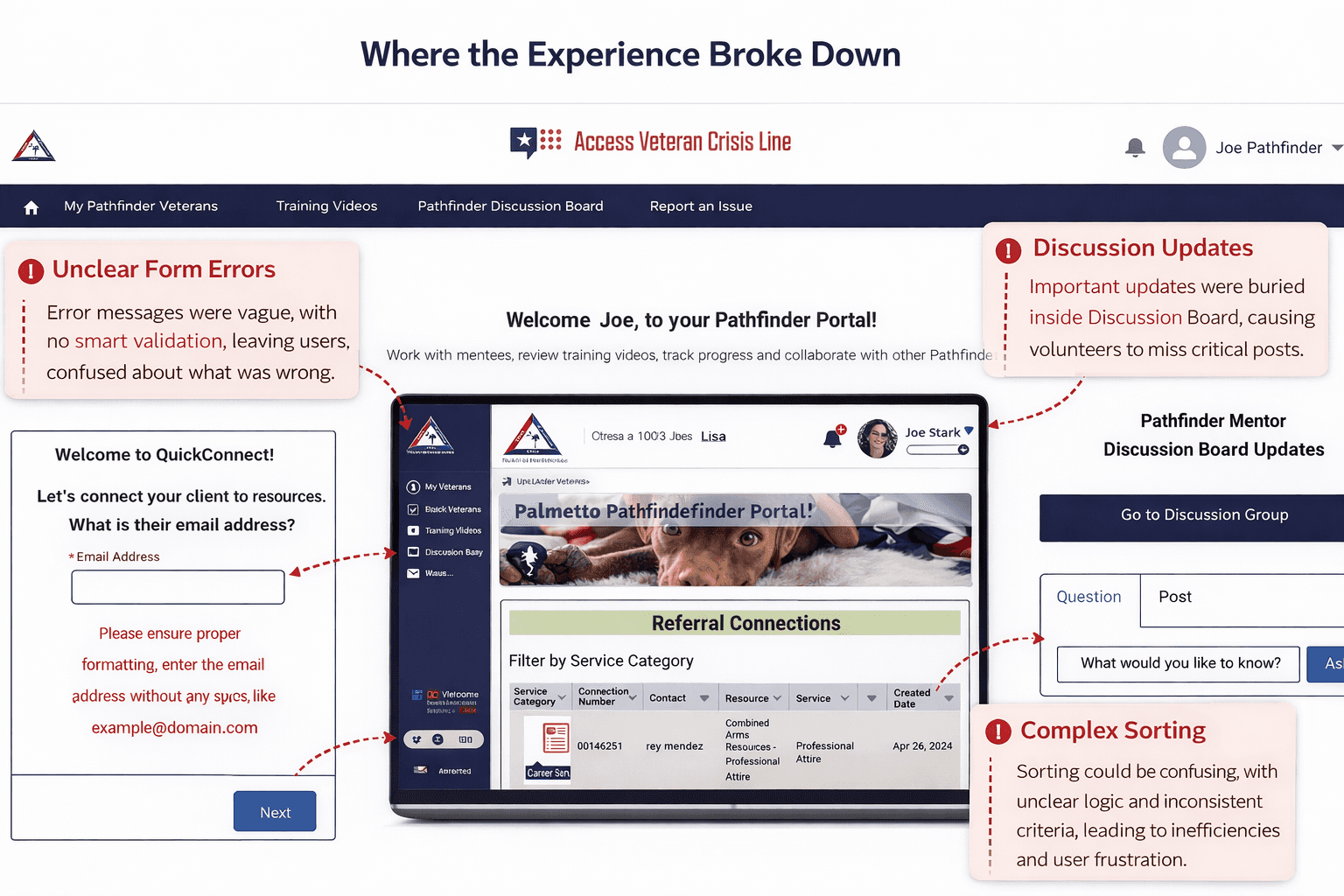
Where the experience broke down
The Challenge
Designing for multiple users with interconnected responsibilities
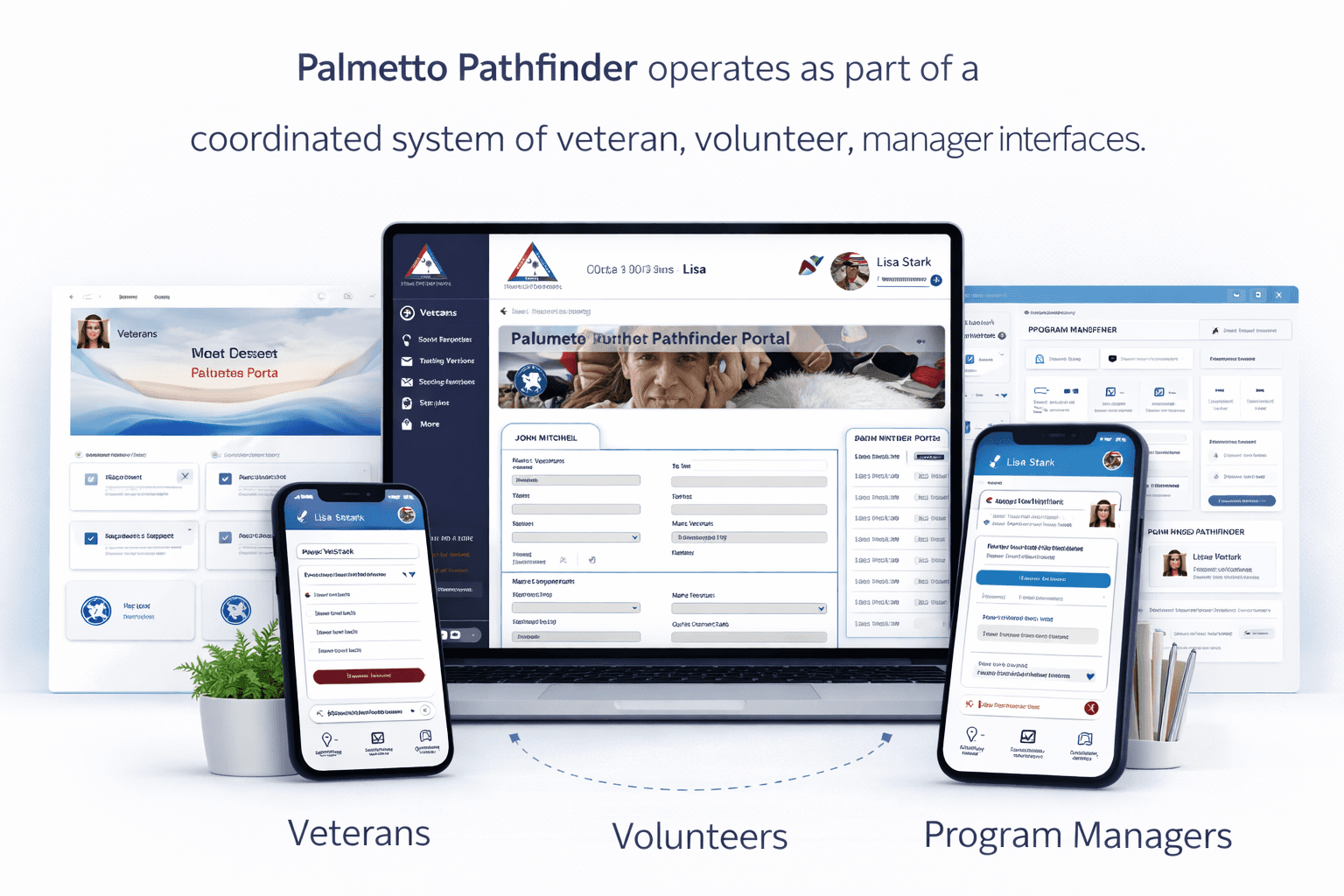
The Palmetto Pathfinder Program required a system that could support three distinct user types—veterans, volunteer Pathfinders, and program managers—each with different goals, responsibilities, and workflows.
The challenge was not just usability, but coordination: ensuring that veterans could access help, volunteers could provide support, and managers could oversee and assign cases within a unified system.
A multi-role system, not a single-user experience
Unlike traditional platforms, this system required designing for interconnected roles. Veterans seek support, Pathfinders guide and follow up, and managers coordinate and assign cases.
The experience had to support each role individually while ensuring seamless interaction between them.
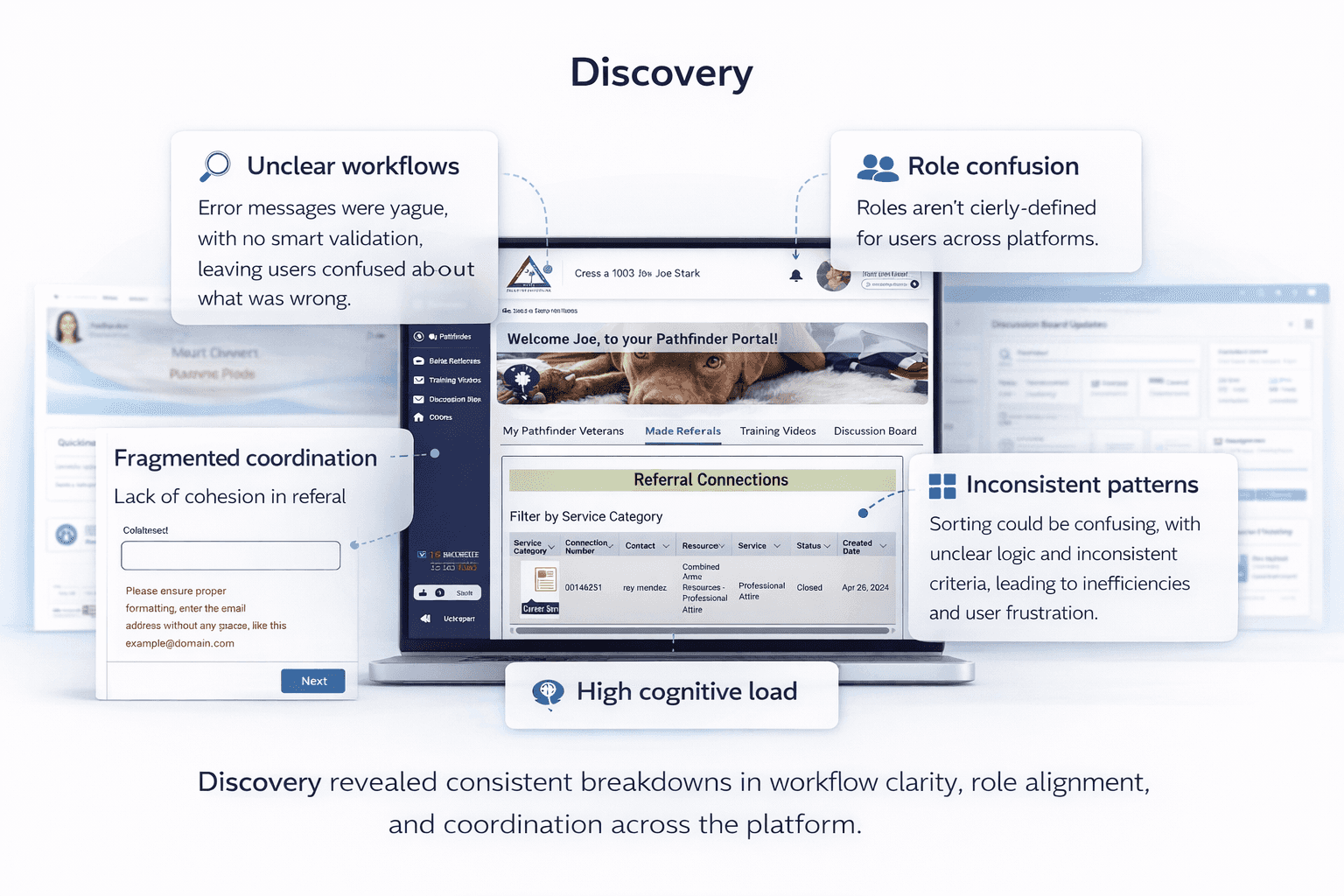
Discovery revealed consistent breakdowns in workflow
clarity, role alignment, and coordination across the platform,
contributing to increased cognitive load and user friction.
Discovery and Diagnosis
Analysis revealed friction not only within individual workflows, but across roles—where breakdowns in communication, assignment, and follow-up created gaps in support
● Structure role-based experiences
● Clarify responsibilities and actions
● Enable coordination across users
● Ensure consistency across web and mobile
Key Findings
Analysis revealed breakdowns in coordination, clarity, and role alignment across the platform
Research and workflow analysis identified critical gaps in how veterans, Pathfinder volunteers, and program managers interacted within the system. The experience lacked clear role definition, consistent workflows, and structured pathways for coordination.
Users were often required to interpret next steps on their own, leading to fragmented interactions, inconsistent follow-through, and increased cognitive load across both web and mobile experiences. These issues were amplified by the need to support multiple user types with different responsibilities within a single system.
Strategy
Reframing the platform around clear roles, coordinated workflows, and system-level alignment
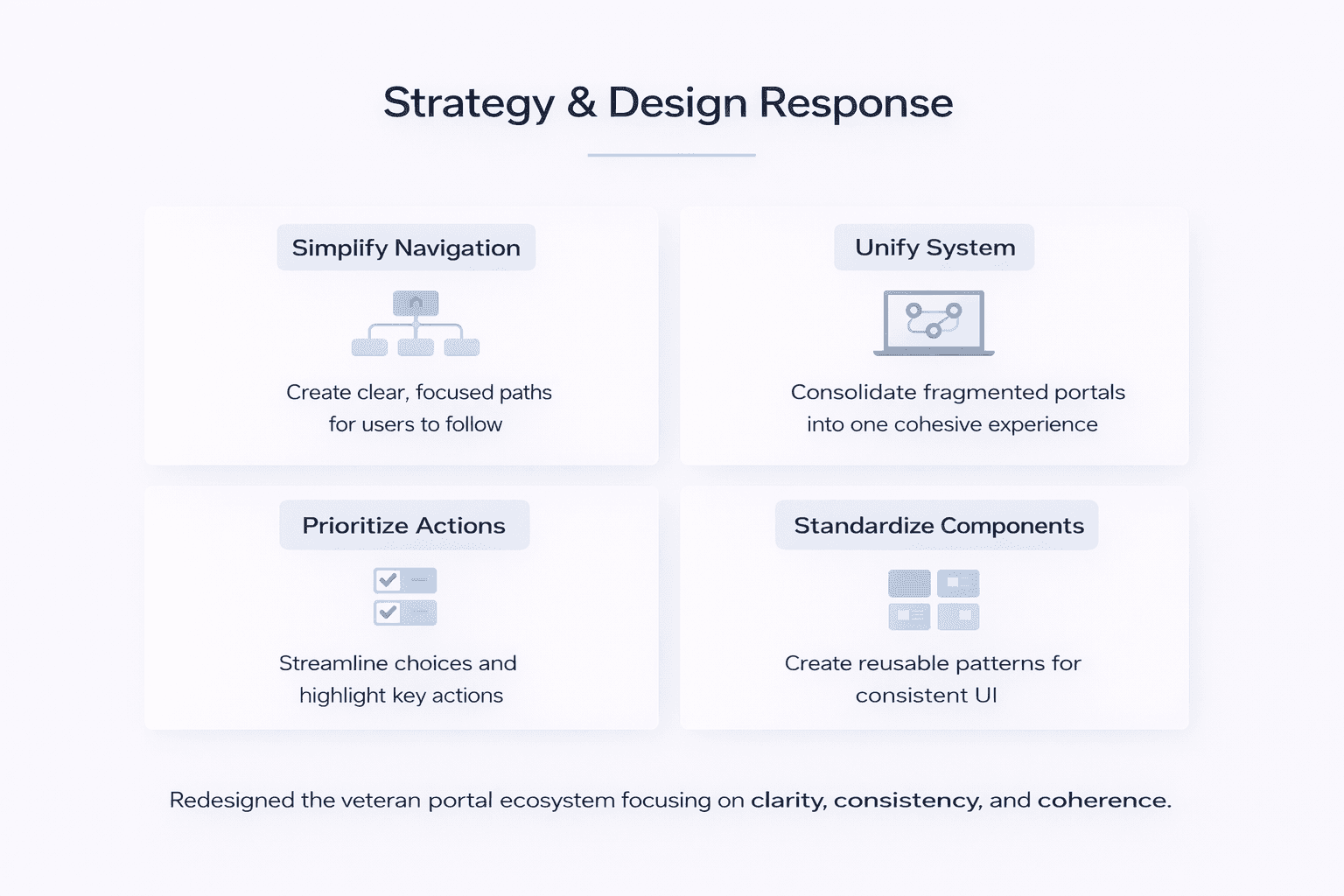
The strategy focused on transforming a fragmented experience into a coordinated system that supports multiple user roles working together. Rather than designing isolated interfaces, the goal was to create a unified structure that clearly defines how veterans, Pathfinder volunteers, and program managers interact and progress through the platform.
This required simplifying workflows, establishing consistent interaction patterns, and aligning the experience across web and mobile environments. By prioritizing clarity, role-based guidance, and system cohesion, the redesign created a more scalable and intuitive foundation for supporting veterans through coordinated care.
Design Response
Translating strategy into a structured, role-driven experience across web and mobile
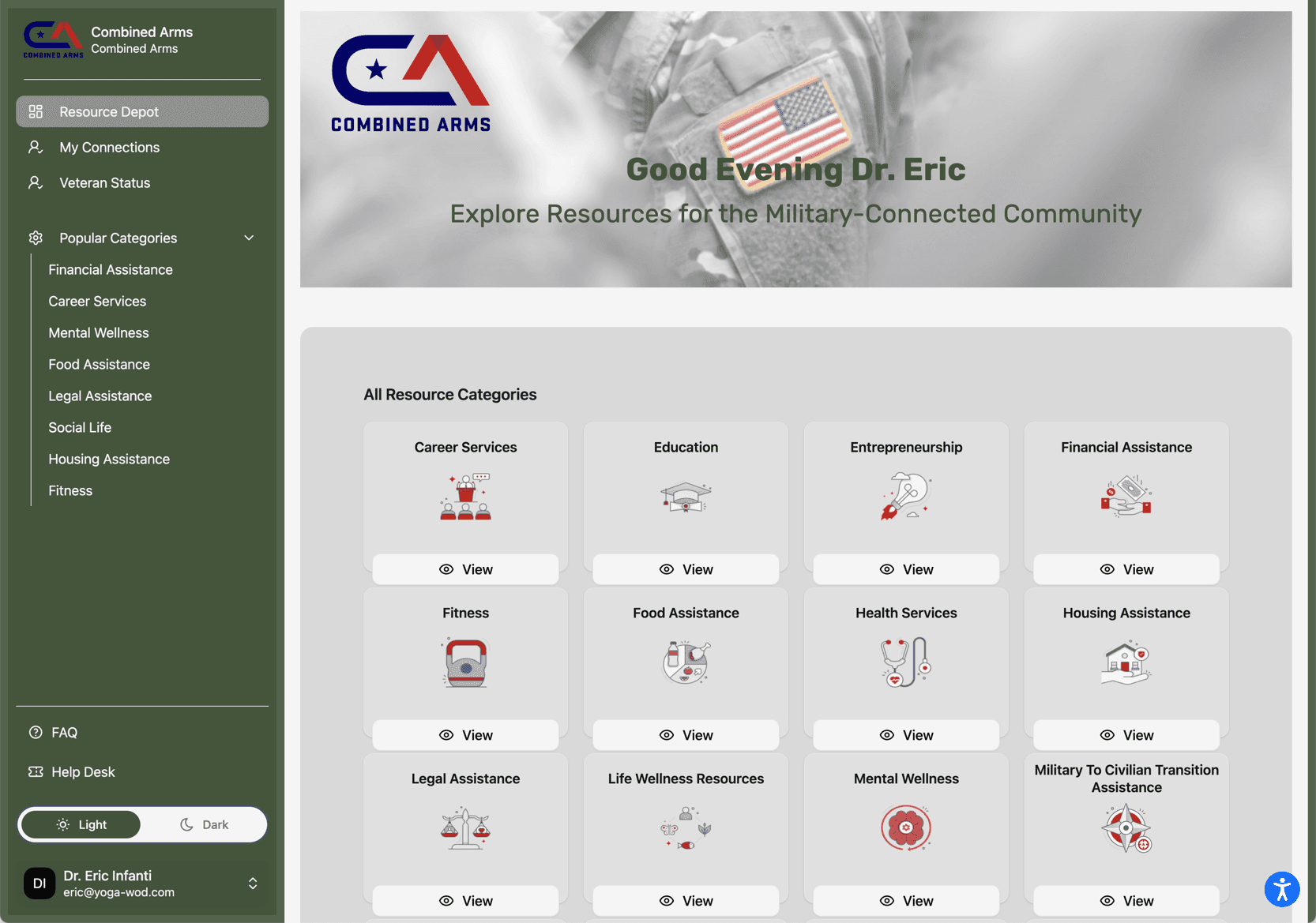
The design response focused on creating a clear, consistent experience tailored to each user role while maintaining cohesion across the system. Interfaces were structured to guide users through their responsibilities, whether requesting support, coordinating resources, or managing assignments.
On the web platform, the experience emphasizes visibility, structure, and workflow clarity, enabling users to understand their role and take action efficiently. On mobile, the design supports accessibility and speed, allowing Pathfinders and managers to engage with the system in real time.
Across both platforms, consistent patterns, simplified navigation, and clear calls to action reduce cognitive load and improve coordination, helping users move from request to resolution with greater confidence.
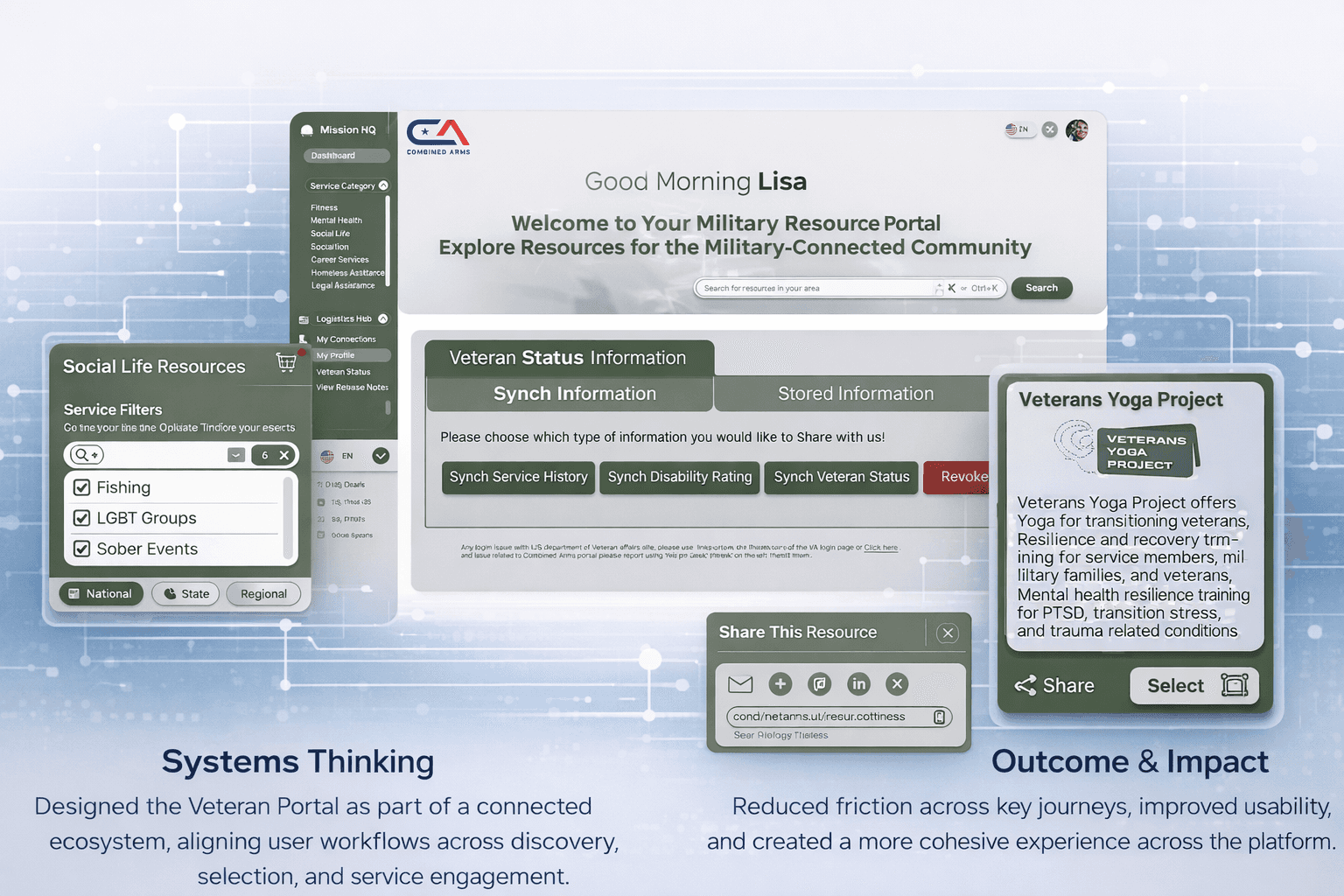
Systems Thinking
i need subtitle and body text for the systems thinking and outcome & impact sections
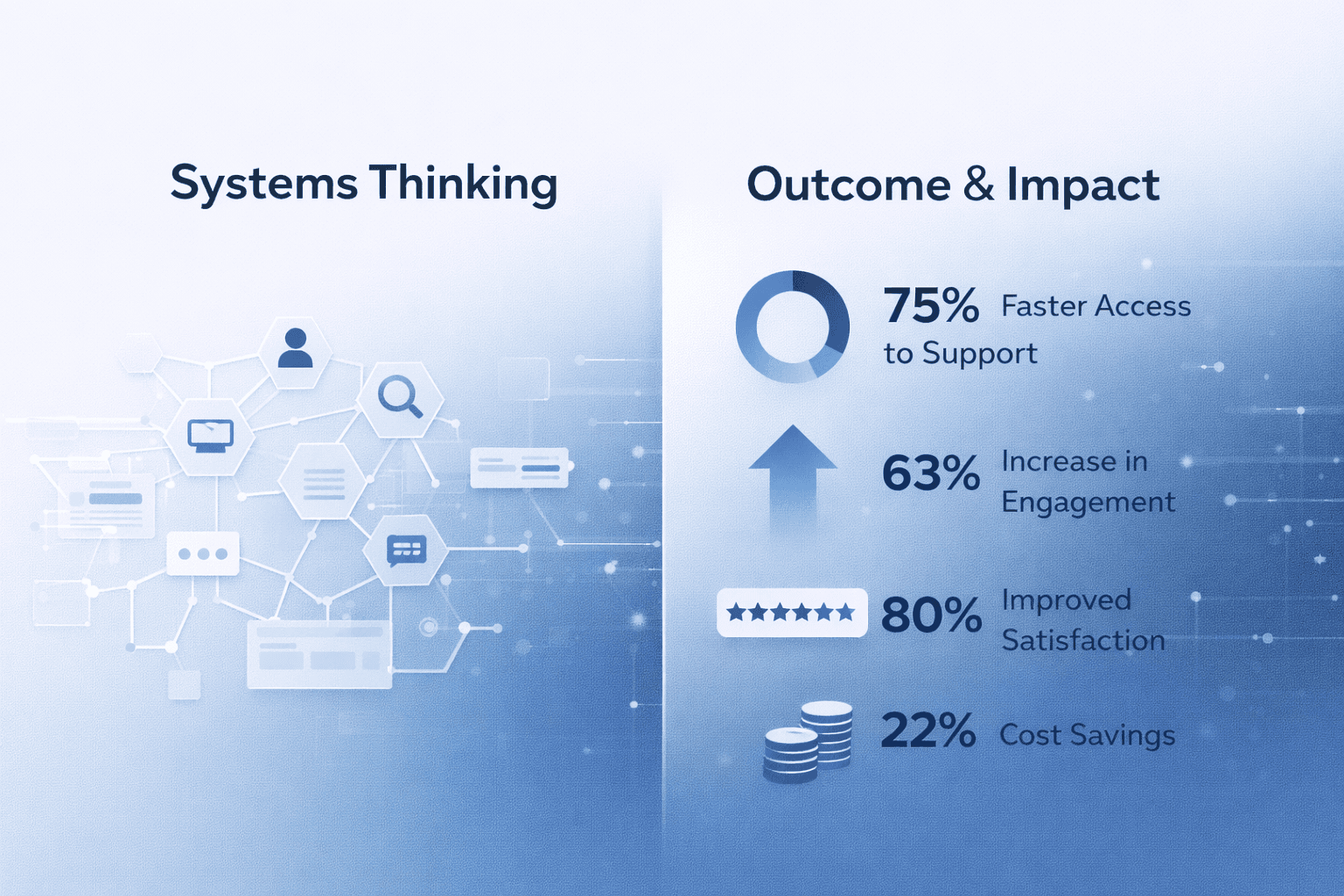
This platform required more than a set of individual interfaces—it demanded a coordinated system that supports how different users work together. Veterans, Pathfinder volunteers, and managers each play a distinct role, but their actions are interconnected and dependent on one another.
The design focused on aligning these roles within a shared structure, ensuring that requests, assignments, and follow-through could move seamlessly across the system. By creating consistent patterns and clear relationships between users, the platform supports coordination at scale while maintaining clarity at the individual level.
Outcome & Impact
Improved coordination, clarity, and efficiency across the veteran support system
The redesigned platform created a more structured and cohesive experience across web and mobile, enabling clearer communication and coordination between veterans, volunteers, and program managers. Users can now better understand their role, take action with confidence, and move through workflows with reduced friction.
By aligning the system around real-world interactions, the platform supports more effective resource connection, improved follow-through, and a stronger foundation for scaling the program.
Contraints & Tradeoffs
The design was shaped by real-world constraints, including evolving program requirements, role-specific workflows, and the need to support both web and mobile environments. The platform also needed to remain intuitive for volunteers with varying levels of technical experience while maintaining structure for program oversight.
Tradeoffs were required to balance flexibility with clarity. In some cases, simplifying workflows meant limiting customization, while in others, maintaining consistency across roles and platforms required standardizing interactions rather than tailoring each experience independently. These decisions prioritized usability, coordination, and long-term scalability of the system.
Looking Ahead…
Where I would take the experience next
Expanding coordination, personalization, and system intelligence.
Future iterations would focus on enhancing personalization, improving how resources are matched to veteran needs, and strengthening visibility across the system. Additional opportunities include deeper integration between workflows, more intelligent assignment capabilities, and improved tracking of outcomes over time.
As the program scales, the platform can evolve to better support coordination across regions, enabling more efficient collaboration between volunteers and managers while maintaining clarity and ease of use.
Reflection
What this project reinforced
Designing systems that support people working together.
This project reinforced that effective UX in complex environments is not just about individual user interactions, but about how people, roles, and workflows connect within a system. Designing for multiple users with shared responsibilities requires clarity, consistency, and a deep understanding of how actions impact others.
By focusing on coordination, structure, and usability, the platform moves beyond interface design to support real-world outcomes—helping ensure veterans receive the guidance and resources they need.
Designed the Palmetto Pathfinder platform as a coordinated system, aligning workflows across veterans, volunteers, and program managers.
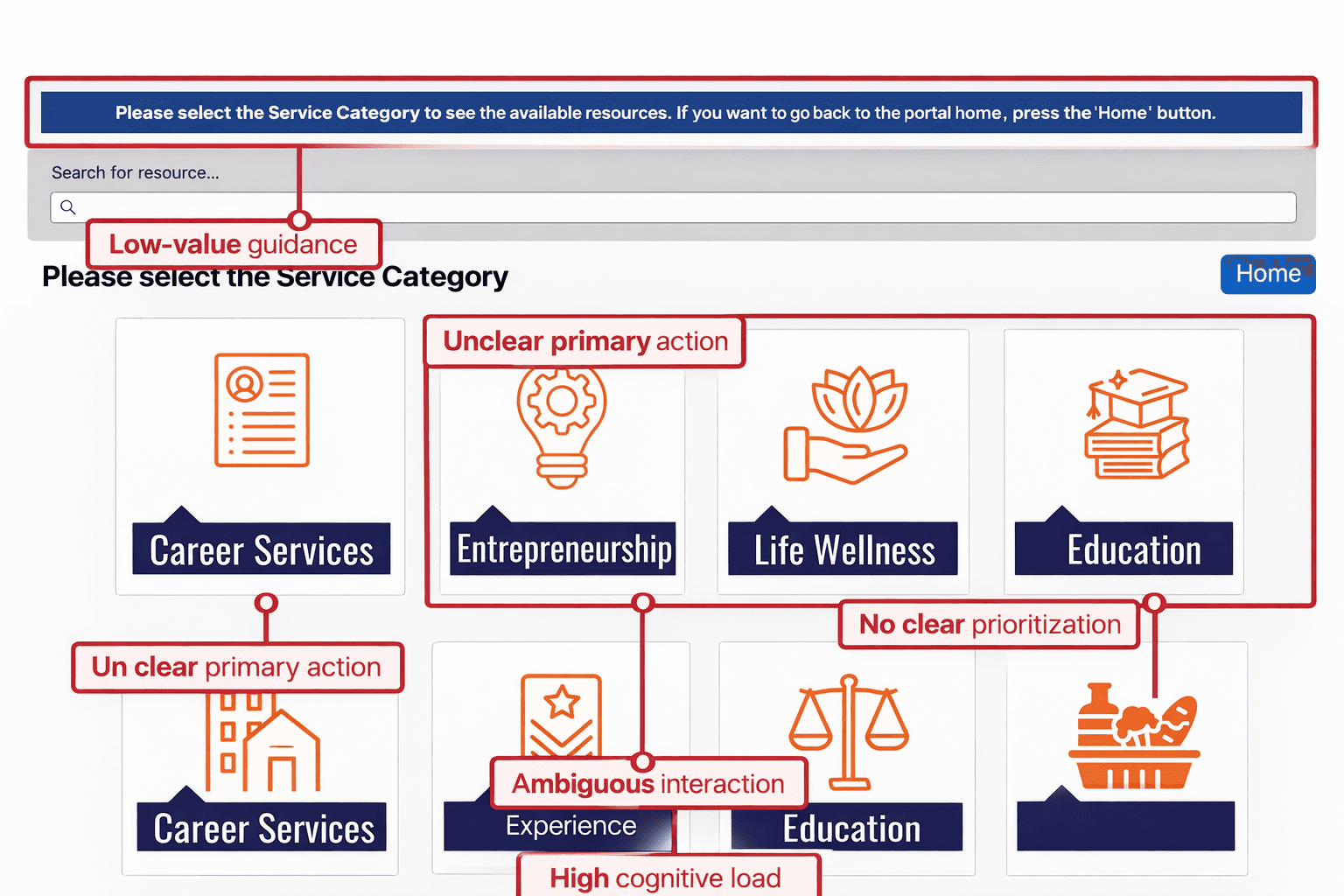
Before
Unclear entry points and competing options made it difficult for users to know where to begin.
After
A structured, guided experience with clear actions and improved hierarchy makes it easier for users to confidently get started.
3 Roles
Unified into one
coordinated platform
Web+Mob
Seamless experience across web and mobile
End-to-End
Structured workflows from request to resolution
Real-Time
Improved coordination between users and managers
Impact at a System Level